

UCLA Law School
UCLA Chancellor Stirs Uproar Over Criticism of 9/11 Symposium
Daily Bruin: “One week after Chancellor Julio Frenk condemned a School of Law symposium about the 9/11 terrorist attacks, more than 270 law professors nationwide are raising concerns about academic freedom at the university.
Frenk said in a Sept. 11 statement that UCLA’s views do not align with the two-day symposium – titled “25 Years After 9/11: Reimagining Freedom, Justice, and Security” – which examined how the government’s response to the 2001 attacks on the World Trade Center shaped war, immigration enforcement, surveillance and civil rights.
The talk included Melanie Partow, an attorney who represented alleged 9/11 conspirator Khalid Sheikh Mohammed, as a symposium guest speaker. Frenk said in his statement that he supported UCLA computer science professor Judea Pearl, whose son – Wall Street Journal reporter Daniel Pearl – was killed by Mohammed in 2002.
Pearl said in an emailed statement to The Bruin that platforming Partow and Hussam Ayloush – executive director of the Council on American-Islamic Relations – was “despicable.”
“We reject antisemitism and terrorism in all their forms, and we believe our campus must be a place where the dignity of every member of our community is respected,” Frenk said in the statement.”
To read more, click here.

UC-Berkeley
Justice Department Accuses Berkeley Law of Discrimination
Reuters: “The Trump administration on Wednesday accused UC Berkeley Law School of illegally discriminating against white and Asian applicants, the latest in a wave of such allegations it has leveled against graduate programs in California following a 2023 Supreme Court decision barring the consideration of race in college admissions.
A joint investigation of the Department of Justice and Department of Education cited questions on the law school’s application form and disparities in standardized test scores among demographic groups in arguing that the school’s admissions process is discriminatory.
It also accused law school dean Erwin Chemerinsky of intentionally seeking to circumvent the Supreme Court’s ruling in Students for Fair Education v. Harvard, citing his public statement that the school would “aggressively pursue” a diverse student body and faculty.”
To read more, click here

Florida State Law Grads Top First-Time Bar Passage Rate
Florida State University: “Florida State University College of Law graduates earned the highest first-time bar passage rate among Florida law schools on the July 2026 Florida Bar Exam, with 91.8% of first-time test takers passing, according to results released Friday by the Florida Board of Bar Examiners.
Of FSU Law’s 110 first-time test-takers, 101 passed the exam. This placement ranks FSU Law No. 1 among all accredited Florida law schools and positions the law school 11.4 percentage points above the Florida law school average of 80.4%.
“We are tremendously proud of our graduates for achieving the highest first-time bar passage rate in Florida,” said Erin O’Hara O’Connor, dean of the FSU College of Law. “This extraordinary result reflects the talent, discipline and determination of our students, as well as the commitment of our faculty and staff to their success. Our graduates worked incredibly hard to reach this milestone, and we are excited to see all that they will accomplish as they begin their legal careers.”
To continue reading, click here.
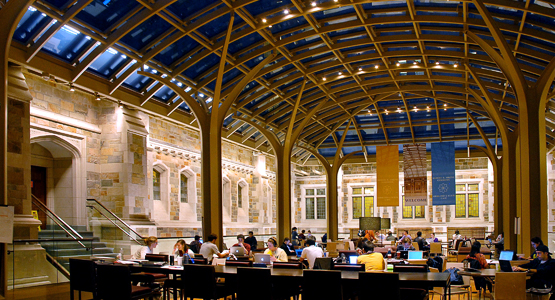
University of Michigan
ADDITIONAL STORIES
What Elite Law Firm Associates Reveal About Law School Pipelines
US Lawyer Group Repeals DEI Rule For Law Schools As Accreditation Decision Looms
Meet Michigan Law’s JD Class of 2029
Justice Clarence Thomas Blasts Stanford Law School as ‘Off Limits’ to Conservatives
US Universities Are Teaching Kids To Wage War On American Society — Where Has The Sanity Gone?
© Copyright 2026 Poets & Quants. All rights reserved. This article may not be republished, rewritten or otherwise distributed without written permission. To reprint or license this article or any content from Poets & Quants, please submit your request HERE.

