

How Law Schools Are Adapting to AI
Government Technology: “Developing legal expertise has traditionally followed a linear process: from the LSAT to law school, then to junior associate and, eventually, senior attorney. New lawyers learned the profession by doing the work that more experienced attorneys had less time for: researching cases, reviewing documents, drafting memos and preparing briefs.
As artificial intelligence has grown more prolific, in some cases a rung has fallen out of the ladder. Recent law school graduates in entry-level roles may be asked to harness AI for these tasks rather than putting in many repetitions.
For example, in a 2024 study, AI-assisted highlighting reduced the time law students spent on the task by 30 percent. At the same time, a Stanford University study of AI legal research tools found that hallucination rates range from 17 percent to 33 percent.
As a result, law school professors and researchers are having to rethink how to best train students to use AI, assess its outputs and understand its impacts on the legal system at large.”
To read more, click here.

University of Chicago Law School
Richard Posner, Chicago Law Scholar and Former Federal Judge, Passes Away
University of Chicago: “Senior Lecturer Richard Allen Posner, a longtime University of Chicago Law School scholar, former federal appellate judge, and pioneer in the field of law and economics, died on November 10. He was 87.
Posner, who joined the Law School faculty in 1969 and spent 36 years as a judge on the US Court of Appeals for the Seventh Circuit, is widely considered to be the most influential legal scholar of all time and, during his time on the bench, was considered to be among the most powerful jurists outside the Supreme Court. He authored thousands of court opinions, hundreds of academic articles, and dozens of books, and was a leading scholar of law and economics, a field born and developed at the University of Chicago beginning in the early 20th century.
The Law School’s eminence in the field—which brings the tools of economic theory to bear on legal rules and institutions, offering the potential to improve policymaking, market efficiency, and even judicial decision making—is what drew Posner to Chicago. He quickly became a top figure, provoking debate with views about the efficiency of common law and, in 1973, authoring the field’s seminal book The Economic Analysis of Law, which is now in its ninth edition.
“There has never been a legal scholar quite as prolific, influential, and endlessly curious as Dick Posner—he was a giant whose influence on our legal system, the field of law and economics, and on our law school cannot be overstated,” said Law School Dean Adam Chilton, the Howard G. Krane Professor of Law. “As a law and economics scholar and torts professor, I doubt there has been a week that’s gone by since I started teaching at the Law School where I haven’t talked about one of Dick’s ideas or opinions. We will mourn his loss deeply, and on behalf of the entire Law School community, I extend our deepest condolences to his family.”
To read more, click here.
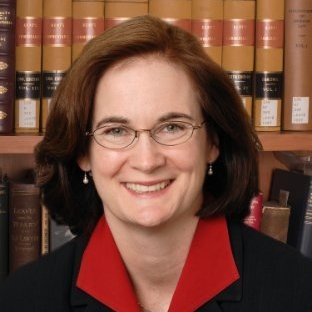
Mary Graw Leary
West Virginia University Names New Dean For College of Law
West Virginia University: “West Virginia University has selected a nationally recognized criminal law expert and academic leader as the new permanent dean for the WVU College of Law.
An experienced legal scholar and administrator, Mary Graw Leary most recently served as a professor at Catholic University of America’s Columbus School of Law, where she also held positions as senior associate dean for academic affairs and chair of the University’s Academic Senate.
“As West Virginia’s only law school, the WVU College of Law needs a leader that matches its unique qualities,” WVU Provost and Vice President for Academic Affairs Beverly Wendland said. “That person is Mary Graw Leary. Her experience as a legal professional and higher education administrator leaves no doubt that she will bring vision, commitment, and energy to the College of Law’s land-grant mission.”
In her nearly 20 years at the Columbus School of Law, Graw founded the Bakhita Initiative for the Study and Disruption of Modern Slavery, directed the Modern Prosecution Program, and received numerous teaching awards, including “Professor of the Year” multiple times. She also led initiatives to increase bar passage rates, review academic policies, and develop new educational opportunities for students.
To read more, click here.
© Copyright 2026 Poets&Quants. All rights reserved. This article may not be republished, rewritten or otherwise distributed without written permission. To reprint or license this article or any content from Poets&Quants, please submit your request HERE.

